
Papuaaround.com – The Central Papua Police have confirmed a significant shift in the operational pattern of the Armed Criminal Group (KKB), warning that the group is no longer confined to remote mountainous areas and has now entered the urban center of Nabire City, the capital of Central Papua Province. The development has raised concerns over public safety and prompted authorities to strengthen law enforcement measures across several districts.
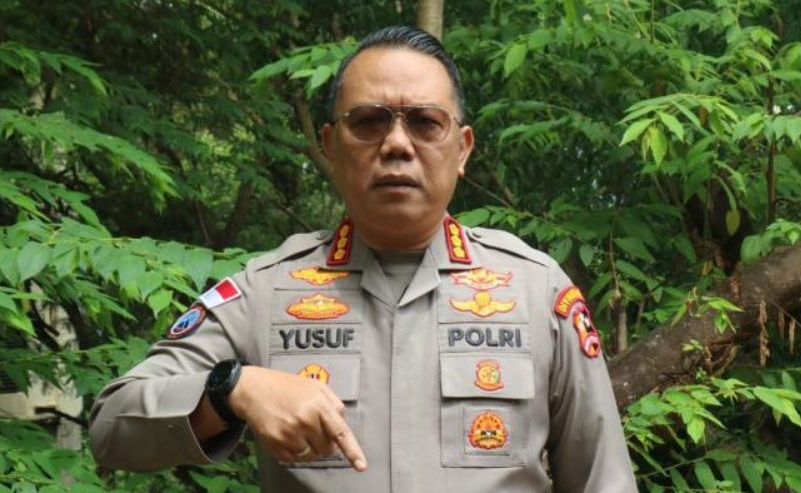
Central Papua Police Chief Brigadier General Alfred Papare stated that intelligence and field reports indicate KKB elements are currently active within Nabire City. According to him, this marks a notable escalation compared to previous years, when the group largely operated in isolated and rugged terrain.
“The KKB no longer operates solely in the mountainous regions of Central Papua. At present, their activities have expanded into the heart of Nabire City,” Papare said in an official statement on Monday.
He emphasized that the police remain committed to enforcing the law against any individuals or groups that threaten public order and security. Papare underlined that maintaining stability in Central Papua remains a top priority, particularly as the region faces evolving security challenges.
Throughout 2025, the Central Papua Police recorded an increase in violent incidents attributed to the KKB. These actions, according to Papare, were not only more frequent but also more aggressive in nature. Several attacks reportedly targeted vital infrastructure and security personnel, posing a direct risk to civilians and government operations.
One of the most notable incidents occurred in Puncak Regency, where several buildings were set ablaze. The police believe the arson attacks were carried out by KKB factions led by Tentua Kogoya and Kalenak Murib. The destruction of property in the area disrupted local activities and heightened fear among residents.
In addition to arson, the KKB is also suspected of involvement in a series of shootings. These incidents included attacks on a retired National Police officer and an assault on personnel from the Mobile Brigade Unit (Brimob) Yon C Pelopor. The latter incident resulted in fatalities, further underscoring the severity of the threat.
Papare also confirmed that police personnel have been among the victims of KKB violence. One case involved the death of a police officer from the Puncak Jaya Police following an attack allegedly carried out by a KKB group led by Bumiwalo Enumbi. Such incidents, he said, illustrate the risks faced by security forces operating in the region.
Despite these challenges, Papare stressed that the police will continue to pursue firm and measured law enforcement actions. He stated that operations are conducted with careful planning to protect civilians while ensuring that perpetrators are brought to justice.
Looking ahead to 2026, the Central Papua Police have identified several regions as priority areas for security monitoring and preventive measures. These areas include Puncak Jaya, Puncak, Dogiyai, Intan Jaya, Deiyai, Nabire, and Mimika Regency. According to Papare, these locations have either experienced KKB activity in the past or are considered vulnerable due to geographic and strategic factors.
The expansion of KKB operations into an urban environment such as Nabire presents new challenges for law enforcement. Urban settings increase the risk of civilian casualties and complicate security operations due to population density and infrastructure constraints. As a result, the police are enhancing coordination with local governments and community leaders to strengthen early detection and response mechanisms.
Papare also called on the public to remain vigilant and cooperate with authorities. He encouraged residents to report suspicious activities and avoid spreading unverified information that could cause panic. Public participation, he said, plays a crucial role in maintaining stability and supporting security efforts.
While the situation remains dynamic, the Central Papua Police assert that they are prepared to address potential threats in 2026. Through intensified patrols, intelligence-led operations, and inter-agency cooperation, the police aim to prevent further violence and restore a sense of safety across the province.
The recent developments highlight the shifting security landscape in Central Papua. As the KKB adapts its tactics and areas of operation, authorities face increasing pressure to respond effectively while safeguarding civilian life. The coming months will be critical in determining how successfully security forces can contain the threat and prevent further escalation.