


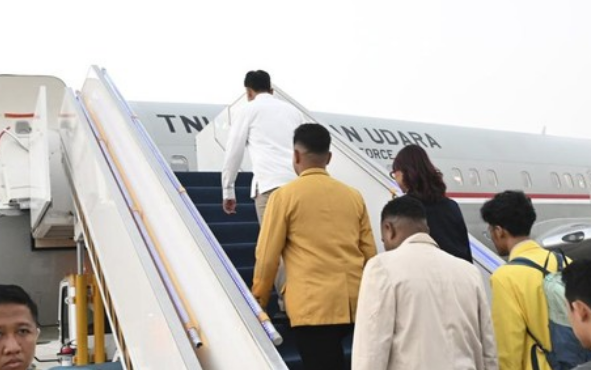
The involvement of university students in public policy monitoring has drawn renewed attention following a government initiative that included student representatives in an official working visit across Eastern Indonesia. The move highlights a growing effort to incorporate youth perspectives into the evaluation of major national development programs while strengthening transparency and public accountability.
A group of students from several universities joined Vice President Gibran Rakabuming Raka during a series of visits to East Nusa Tenggara, Gorontalo, and Papua. The trip focused on reviewing the implementation of two flagship government programs, namely the Free Nutritious Meals initiative and the Red and White Village Cooperative program.
The participation of students marked an uncommon approach in government field visits. Rather than limiting discussions to government officials and local stakeholders, the initiative opened opportunities for young academics to observe firsthand how national programs are carried out in different regions.
Government officials described the visit as part of a broader effort to improve governance standards, enhance supervision mechanisms, and ensure that public funds allocated to priority programs deliver measurable benefits to communities. The inclusion of students was also intended to provide an independent perspective on challenges faced during implementation.
Across Indonesia, student organizations have traditionally played an important role in public discourse. Universities often serve as centers of critical thinking, policy debate, and civic engagement. As a result, involving students in field assessments may help bridge the gap between policymakers and younger generations who frequently voice concerns regarding public spending, transparency, and service delivery.
During the visit, discussions focused on identifying areas where program implementation could be strengthened. Government representatives emphasized the importance of continuous evaluation, particularly for initiatives that involve substantial public investment and directly affect community welfare.
The Free Nutritious Meals program remains one of the government’s key social initiatives. Designed to improve nutritional standards and support human resource development, the program seeks to provide healthier food access to targeted beneficiaries. However, like many large-scale public programs, it requires ongoing monitoring to ensure consistency, efficiency, and proper budget utilization.
Meanwhile, the Red and White Village Cooperative program aims to empower local economies by strengthening cooperative institutions at the village level. The initiative is expected to create new economic opportunities, support small businesses, and improve access to essential services for rural communities.
Observers note that involving students in monitoring activities can generate several benefits. First, students gain practical exposure to policymaking and governance processes beyond classroom discussions. Second, government institutions receive feedback from individuals who are not directly involved in administrative structures. Third, public trust may improve when oversight efforts become more participatory and inclusive.
The working visit also reflected a growing recognition that policy effectiveness depends not only on budget allocation but also on public engagement. In recent years, governments around the world have increasingly sought input from civil society groups, academic institutions, and youth organizations when evaluating public programs.
For many students, participation in field visits offers a unique opportunity to understand the realities faced by communities in different regions. Conditions in Eastern Indonesia often differ significantly from those in major urban centers. Infrastructure challenges, geographic barriers, and varying socioeconomic conditions can influence how national programs are implemented at the local level.
By observing these conditions directly, student representatives may develop a more comprehensive understanding of development issues while contributing constructive recommendations for improvement. Such experiences can also encourage greater civic responsibility among young people and inspire future involvement in public service.
Government officials reiterated that accountability remains a key priority in managing strategic programs. Efforts to prevent misuse of funds, improve administrative processes, and strengthen monitoring systems continue to be emphasized as part of broader governance reforms.
Analysts suggest that collaborative oversight models involving students and other community representatives could become more common in the future. As public expectations regarding transparency continue to rise, participatory approaches may help ensure that government initiatives remain responsive to local needs while maintaining public confidence.
The Eastern Indonesia visit therefore represented more than a routine inspection tour. It showcased an emerging model of engagement where students are invited to contribute directly to discussions about national development. Whether this approach expands to other programs and regions remains to be seen, but it signals an effort to create stronger connections between policymakers, communities, and the next generation of leaders.