


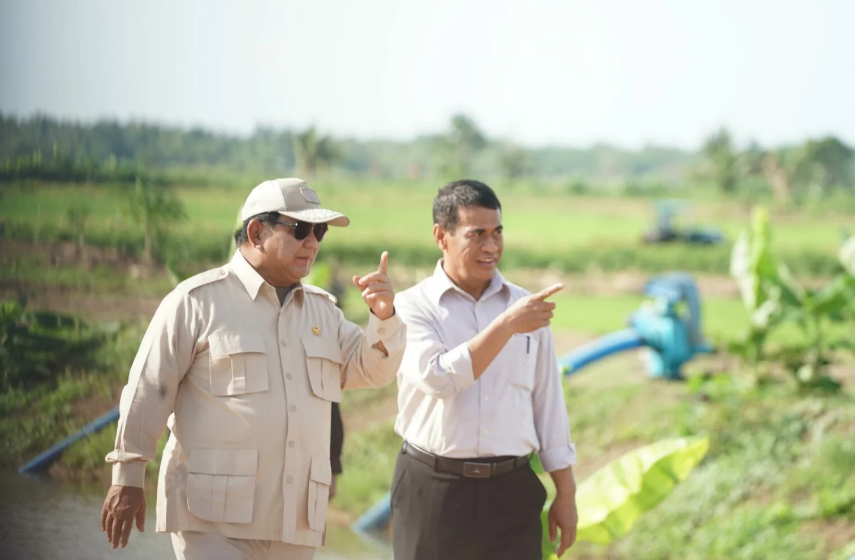
Papuaaround.com – President of the Republic of Indonesia Prabowo Subianto has outlined a long-term vision to strengthen energy independence across the country, with Papua positioned as a key region in achieving that goal. During a briefing at the State Palace in Jakarta on Tuesday, December 16, 2025, the President emphasized the importance of developing bioenergy crops and renewable power sources in Papua to support national energy and food self-sufficiency.
In his remarks, Prabowo highlighted palm oil cultivation as one of the strategic pillars for future energy production in Papua. He explained that palm oil could be processed into fuel, reducing dependence on fossil-based petroleum products. According to him, Papua should not be left behind in the national energy transition and must be included in large-scale agricultural and energy planning.
Beyond palm oil, the President also pointed to sugarcane and cassava as essential crops for bioethanol production. These commodities, he said, offer strong potential to support alternative fuels while simultaneously strengthening local agricultural economies. By expanding cultivation of these crops, Papua could play a dual role as a food producer and an energy supplier.
Prabowo stated that the government is targeting a five-year timeframe to achieve energy and food self-sufficiency in all regions, including Papua. He stressed that regional independence remains a cornerstone of national resilience. In his view, self-sufficient regions would be better equipped to withstand global economic pressures and fluctuations in energy prices.
The President further underlined that energy production in Papua should directly benefit local communities. He expressed the expectation that residents would enjoy the economic and social returns from resources developed on their own land. This approach, he noted, aligns with broader efforts to ensure equitable development between eastern and western Indonesia.
In addition to biofuel-based energy, Prabowo encouraged the optimization of renewable power sources such as solar and hydropower in Papua. He observed that advancements in technology have significantly reduced the cost of renewable energy systems. As a result, these technologies are now more accessible, even for remote and hard-to-reach areas.
Solar energy, according to the President, offers practical solutions for isolated communities that lack reliable electricity. Hydropower, meanwhile, could take advantage of Papua’s abundant water resources. By combining these energy sources, the government hopes to reduce logistical challenges and cut costs associated with transporting fuel from other regions.
Prabowo also addressed the financial implications of energy self-sufficiency. He noted that Indonesia continues to spend hundreds of trillions of rupiah each year on fuel imports. If domestic bioenergy production and renewable power generation can be expanded effectively, the country could significantly reduce this burden on the national budget.
He argued that savings from lower fuel imports could be redirected toward development programs, infrastructure, education, and healthcare. In this context, energy independence is not only an economic objective but also a strategic investment in long-term national welfare.
Furthermore, the President emphasized that the push for energy self-sufficiency should go hand in hand with environmental considerations. While promoting palm oil and bioenergy crops, he stressed the need for responsible land management and sustainable practices. This approach aims to balance economic growth with environmental protection.
The meeting on accelerating Papua’s development also reflected the government’s broader commitment to strengthening regional autonomy. Prabowo reiterated that each region should be empowered to stand on its own resources, without excessive reliance on external supply chains. In his view, decentralized energy production would enhance efficiency and resilience.
As Indonesia continues to navigate global energy challenges, the President’s remarks signal a clear policy direction. By integrating agriculture, renewable energy, and regional development, the government aims to build a more self-reliant and balanced national economy.
For Papua, the proposed initiatives represent both an opportunity and a responsibility. If implemented effectively, the development of biofuels and renewable energy could reshape the region’s economic landscape. At the same time, careful planning and community involvement will be essential to ensure that growth remains inclusive and sustainable.