


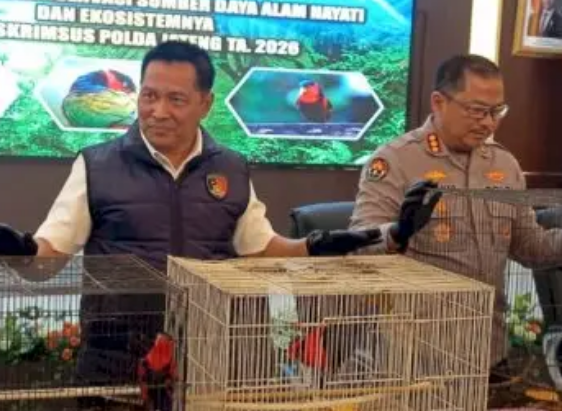
Papuaaround.com – Authorities in Central Java have uncovered an illegal wildlife trafficking case involving 18 protected birds originating from Papua, marking a significant step in enforcing conservation laws and protecting biodiversity. The operation, led by the Special Crimes Directorate of the Central Java Regional Police, resulted in the arrest of three suspects and the rescue of live animals believed to be part of an illicit trade network.
The case came to light following an investigation conducted in mid-April 2026 at Juwana Port, located in Pati Regency. Officers from Sub-Directorate IV, which handles specific criminal offenses, coordinated closely with the Natural Resources Conservation Agency (BKSDA) of Central Java during the operation. Their joint effort led to the discovery of suspected illegal storage and possession of protected wildlife without official documentation.
During the enforcement action, authorities secured 18 black-capped lories, a protected species native to Papua. The birds were found alive and kept in transport cages, indicating preparation for distribution. Investigators believe the animals were being traded without valid certification from authorized breeding institutions, which is required under Indonesian conservation regulations.
According to officials, the suspects allegedly purchased the protected birds without legal permits and transported them across regions for commercial purposes. The wildlife was reportedly sourced from Papua and distributed illegally to Central Java, highlighting a broader network that may involve multiple actors across different مناطق.
Three individuals identified by their initials as EDP (25), BES (26), and G (39), all residents of Juwana, have been named as suspects in the case. They are currently in custody and undergoing further legal proceedings. Investigators are continuing to examine the case to determine whether additional parties are involved in the trafficking chain.
Law enforcement authorities emphasized that the case reflects ongoing efforts to combat illegal wildlife trade, which remains a serious threat to Indonesia’s biodiversity. The collaboration between police and conservation agencies is considered essential in addressing crimes that often involve complex distribution networks and cross-regional operations.
Meanwhile, representatives from the conservation agency expressed appreciation for the swift response by the police. They noted that the successful rescue of the animals demonstrates the importance of inter-agency coordination in protecting endangered species and enforcing environmental laws.
Officials further explained that illegal wildlife trafficking not only causes economic losses but also disrupts ecological balance. Protected species such as the black-capped lory play a crucial role in maintaining biodiversity, particularly in their native habitats. These birds contribute to seed dispersal and ecological regeneration, making their preservation vital for sustaining forest ecosystems.
Following the rescue, all 18 birds have been placed under strict supervision at a conservation facility managed by the Central Java BKSDA. Veterinary teams are currently monitoring their health and ensuring proper care before any potential reintroduction into their natural habitat. Authorities stated that rehabilitation is a critical step to ensure the animals can survive if returned to the wild.
The suspects face serious legal consequences under Indonesia’s conservation laws. They have been charged under legislation governing the protection of biological natural resources and ecosystems, which carries a maximum penalty of up to 15 years in prison and significant financial fines. These penalties are intended to deter illegal activities and reinforce the importance of wildlife protection.
In addition to legal enforcement, police officials also called on the public to play a more active role in preventing wildlife crimes. They urged citizens not to participate in illegal trade and to ensure that any interest in keeping animals is fulfilled through authorized and legal channels. Public awareness is considered a key factor in reducing demand for illegally traded wildlife.
Authorities also encouraged individuals to report any suspicious activities related to wildlife trafficking. Early reporting can help prevent further harm to protected species and support timely intervention by law enforcement agencies.
This case underscores the broader challenges faced in preserving Indonesia’s rich biodiversity. As one of the world’s most biologically diverse countries, Indonesia continues to confront threats from illegal trade, habitat loss, and environmental degradation. Efforts to strengthen enforcement, enhance public awareness, and promote sustainable practices remain critical in addressing these challenges.
The successful exposure of this case highlights not only the importance of law enforcement but also the need for continued vigilance. By dismantling illegal networks and rescuing endangered species, authorities aim to protect ecological balance and ensure the sustainability of natural resources for future generations.
As investigations continue, officials reaffirm their commitment to taking firm action against wildlife crimes. The case serves as a reminder that protecting biodiversity requires collective responsibility, involving government institutions, law enforcement, and society as a whole.