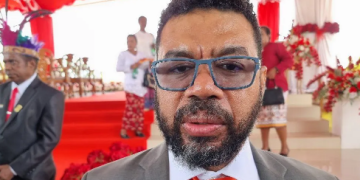

Papuaaround.com – The Free Nutritious Meal Program has demonstrated measurable benefits for children and local communities across Papua, even though its implementation has reached only a quarter of the overall target. Billy Mambrasar, a member of the Executive Committee for the Acceleration of Special Autonomy Development in Papua, stated that as of August 2025, more than 200,000 children in the region have been receiving nutritious meals on a daily basis through the program.
This figure represents approximately 25 percent of the planned 414 Nutrition Service Units, locally known as Satuan Pelayanan Pemenuhan Gizi (SPPG). Around 101 Free Nutritious Meal kitchens are currently operating across Papua. While the number remains below the full target, Mambrasar emphasized that the program’s impact has already been widely felt, particularly in improving child nutrition and stimulating local economic activity.
According to Mambrasar, the early results indicate that the program has strong multiplier effects. Improved nutritional intake is closely linked to better physical growth and cognitive development among children. At the same time, the operation of community-based kitchens has created new employment opportunities, especially for Indigenous Papuans, who have long faced limited access to stable sources of income.
As part of his oversight responsibilities, Mambrasar has conducted direct inspections of Free Nutritious Meal kitchens across all provinces in Papua. One such visit took place at a program kitchen in Sorong, Southwest Papua Province, on Friday, November 28, 2025. The visit aimed to assess daily operations, ensure food safety standards were being met, and gather firsthand feedback from local workers involved in meal preparation and distribution.
During the visit, Mambrasar held discussions with kitchen staff who play a central role in ensuring meals reach schoolchildren on time and in good quality. Rolina Rumpaidus, one of the kitchen workers, expressed her gratitude for the program, noting that it has provided both employment and valuable work experience.
She explained that the program has allowed her and other workers to contribute directly to the well-being of children in their communities. The responsibilities include selecting ingredients, preparing meals, and ensuring that food is distributed safely to schools. According to her, the involvement of local residents strengthens community ownership of the program and builds a sense of shared responsibility.
Mambrasar underlined that the Free Nutritious Meal Program was designed not only to address children’s dietary needs but also to generate direct economic benefits for local households. He highlighted the role of Indigenous Papuan women, many of whom are employed in the kitchens and use their earnings to support their families.
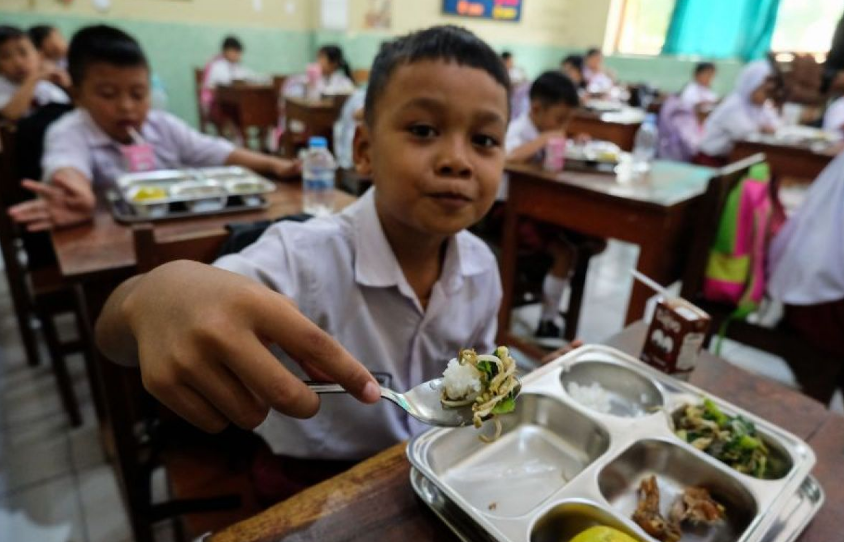
In addition to visiting meal preparation facilities, Mambrasar also observed the distribution process at State Elementary School 24 in Sorong. At the school, he reviewed how meals were delivered to students and noted the positive response from children. Teachers and staff observed that students appeared more enthusiastic during school hours, particularly after receiving balanced meals as part of their daily routine.
The broader educational impact of the program has also been reflected in research findings. A study conducted by Yayasan Kitong Bisa (KBF Indonesia) in Papua showed that literacy levels increased by up to 33 percent in learning centers that received support from the Free Nutritious Meal Program. The research also recorded higher attendance rates and stronger learning motivation, particularly among students from Indigenous Papuan communities.
Responding to these findings, Mambrasar stressed the importance of maintaining the program’s sustainability. He stated that the Free Nutritious Meal Program should not be viewed as a short-term initiative, but rather as a long-term investment in Papua’s future. Consistent funding, effective monitoring, and strong coordination between central and regional governments are considered essential to ensure continued success.
Mambrasar further explained that improving child nutrition is a foundational step toward strengthening human capital in Papua. Better nutrition supports improved educational outcomes, which in turn can contribute to broader social and economic development. Over time, these improvements are expected to enhance workforce readiness and regional competitiveness.
Looking ahead, the government aims to expand the program until all planned kitchens across Papua are fully operational. Achieving this goal will require close collaboration between national authorities, local governments, and community members. Through this collective effort, the program is expected to ensure that every child in Papua has access to adequate nutrition, improved educational opportunities, and a more promising future.