
Papuaaround.com – The Indonesian Agency for Meteorology, Climatology, and Geophysics (BMKG) carried out a strategic working visit to several of its Technical Implementation Units (UPT) in Jayapura City, Papua, on Friday, January 23, 2026. The visit aimed to consolidate meteorological, climatological, and geophysical (MKG) services while reinforcing organizational capacity across the Papua region.
The delegation was led by the Head of BMKG, Teuku Faisal Fathani, accompanied by BMKG Director of Climate Change A. Fachri Radjab, Head of the Regional V MKG Center Yustus Rumakiek, and Advisor to the Head of BMKG Muslim Andri Setiadi. The agenda focused on evaluating service performance, strengthening coordination, and ensuring that BMKG operations remain effective in a region with complex geographical conditions.
The series of activities began at the Class I Meteorological Station in Sentani, Jayapura. As a central hub for aviation meteorological services in Papua Province, the station plays a critical role in supporting flight safety. During the visit, the Head of BMKG reviewed operational readiness, interacted directly with staff, and underlined the institution’s responsibility in safeguarding air transportation while supporting cross-sector development in eastern Indonesia.
According to Teuku Faisal Fathani, BMKG’s mandate extends beyond early warning systems. He emphasized that the agency is tasked with delivering accurate and reliable information to support aviation and maritime safety, as well as national development sectors such as food security, energy, water resources, tourism, health, and infrastructure.
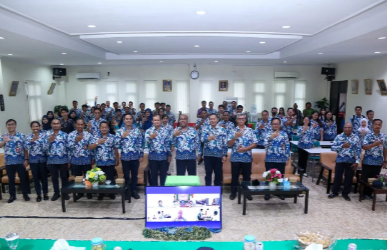
The visit continued at the Regional V MKG Center Office in Jayapura. In this session, the Head of the Regional Center and leaders of BMKG UPTs across Papua presented comprehensive reports through a hybrid format, combining in-person discussions and teleconferencing. The presentations covered human resources, infrastructure conditions, service coverage, and operational challenges in each working area. This evaluation process formed a key part of BMKG’s broader effort to strengthen institutional performance in Papua.
In his directive, the Head of BMKG stressed the importance of organizational restructuring and human resource management. He noted that continuous evaluation is essential to ensure BMKG remains adaptive, resilient, and capable of fulfilling its mandate, particularly in frontier regions.
During the same occasion, the Regional V MKG Center introduced an inclusive disaster literacy innovation through the launch of an educational comic book titled Met Clim Pedia: BMKG Sahabat Cuaca dan Gempa. Designed for diverse audiences, including persons with disabilities, the publication aims to enhance public understanding and preparedness for hydrometeorological and geophysical hazards.
Director of Climate Change A. Fachri Radjab welcomed the initiative and highlighted the strategic role of the Regional V MKG Center in guiding UPTs throughout Papua. He noted that such innovations demonstrate BMKG’s commitment not only to technical services but also to public education and inclusivity.
The working visit also included inspections of the Class III Maritime Meteorological Station at Dok II Jayapura to assess marine weather services, followed by a visit to the Class I Angkasa Geophysical Station. These visits aimed to ensure the reliability of earthquake and tsunami monitoring systems while strengthening coordination with disaster management stakeholders.
Through this comprehensive visit, BMKG reaffirmed its commitment to delivering reliable, inclusive, and sustainable earth system services. The initiative reflects the agency’s ongoing efforts to enhance public safety and support national development in Papua.