

Papuaaround.com – Indonesia’s Special Autonomy policy for Papua continues to serve as a central government instrument to accelerate the welfare of Indigenous Papuans, known as Orang Asli Papua (OAP), by granting broader authority to local governments and encouraging targeted public service innovation.
Deputy Minister of Home Affairs Ribka Haluk emphasized that Special Autonomy is not merely a fiscal mechanism. Instead, it represents a constitutional mandate aimed at providing affirmative space and legal protection for the fundamental rights of Indigenous Papuans, while simultaneously strengthening regional governance in strategic development sectors.
According to Haluk, the core principle of Special Autonomy lies in decentralizing decision-making power. Through this framework, local administrations are expected to design and implement public services that directly address the specific social, cultural, and economic needs of Indigenous Papuans. This approach is intended to ensure that development policies are more inclusive and responsive at the grassroots level.
She explained that the central government has established a strong regulatory foundation to support affirmative policies under Special Autonomy. This foundation includes the creation of region-specific institutions and the empowerment of representative bodies that operate exclusively in Papua. These institutions are designed to safeguard cultural identity, political representation, and community participation in governance.
Affirmative measures, Haluk noted, extend across multiple sectors. Education, healthcare, infrastructure development, and political leadership have all been structured to prioritize Indigenous Papuans. Certain leadership positions, including the gubernatorial role, are reserved to ensure local representation and cultural legitimacy within regional administration.
Beyond governance and social services, Special Autonomy also targets community-based economic development. The policy framework encourages Indigenous Papuans to actively participate as key drivers of economic growth rather than passive beneficiaries of development programs. By strengthening local economic capacity, the government aims to foster sustainable and inclusive regional prosperity.
The evolution of Special Autonomy has continued since its initial implementation in 2001. What began as a policy covering a single province has expanded into six provinces across Papua. This administrative expansion is intended to shorten bureaucratic distances, improve service delivery, and accelerate equitable development throughout the region.
Haluk underlined that local governments now possess the authority to introduce policy innovations tailored to regional realities. These innovations are expected to directly contribute to faster improvements in the living standards of Indigenous Papuans.
Currently, the implementation of Papua’s Special Autonomy has entered a new phase following regulatory adjustments under Law Number 2 of 2021. The central government continues to promote coordination between provincial and district administrations to ensure that special authorities translate into concrete programs with measurable impacts, reaching even the most remote communities.
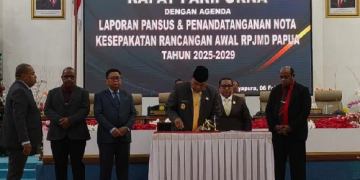
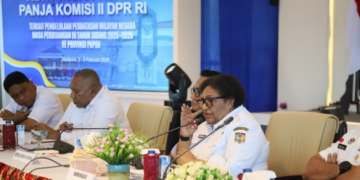
The discussion on Special Autonomy policies involved various stakeholders, reflecting ongoing efforts to align governance, development, and community welfare objectives across Papua.